
Safe, Comfortable Removal of Impacted Wisdom Teeth
Wisdom teeth that can't fully erupt — staying trapped under the gum or bone — can cause pain, infection and crowding. With 3D tomography planning, painless local anaesthesia and a careful surgical technique that protects the nerve, your impacted wisdom tooth is removed safely and comfortably.
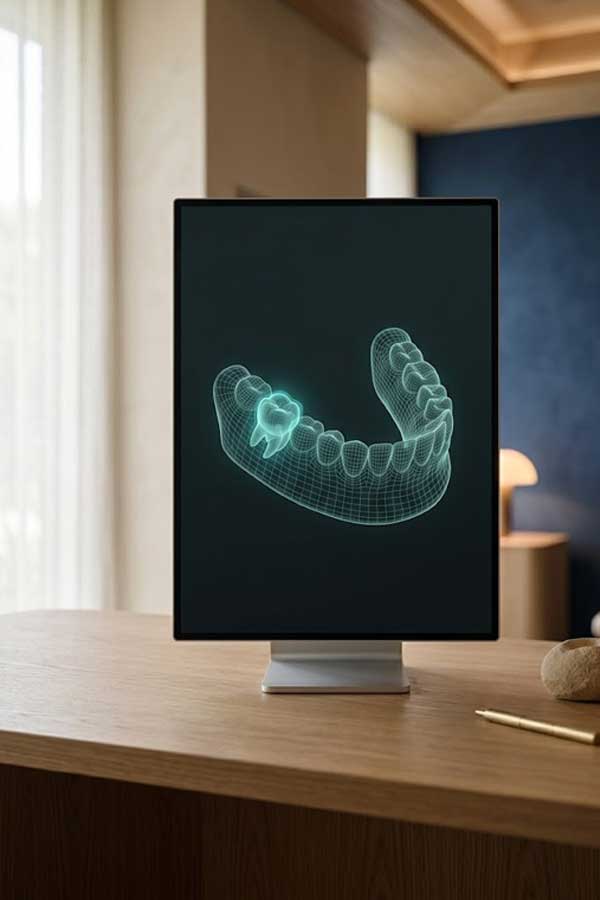
When the Last Molar Can't Erupt
Wisdom teeth are the last molars, usually erupting between ages 17 and 25. When the jaw doesn't have enough room, they stay impacted — fully or partly trapped under the gum or jawbone. An impacted wisdom tooth can press on the neighbouring molar, trap food and bacteria, and trigger repeated infections.
Left untreated, it can cause pain, swelling, difficulty opening the jaw, decay in the adjacent tooth and crowding of the front teeth. At Kadıgil, the tooth's exact position, root shape and relationship to the nerve are mapped with panoramic X-ray and 3D tomography before a careful, nerve-protective surgical extraction under local anaesthesia.
- Pain, swelling or recurring infection around the tooth
- Pressure on or decay in the neighbouring molar
- Crowding of the front teeth or difficulty opening the jaw
- A cyst or bone loss developing around an impacted tooth
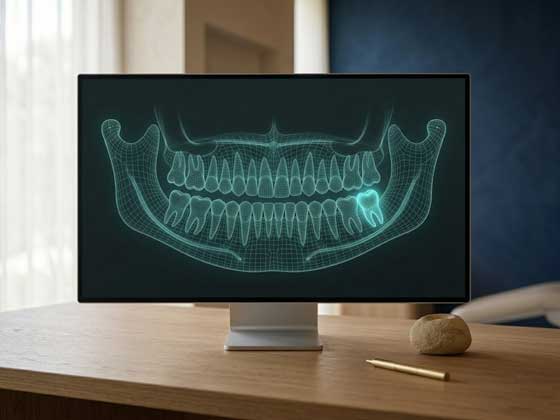
How Is an Impacted Wisdom Tooth Removed?
A careful, planned surgical process from imaging to healing.
Exam & 3D Imaging
The tooth's position, roots and nerve proximity are assessed with a panoramic X-ray and, where needed, 3D tomography. A safe surgical plan is made.
Step 1Anaesthesia
The area is fully numbed with local anaesthesia. You feel no pain during the procedure. Sedation can be arranged for anxious patients.
Step 2Surgical Removal
The gum is gently opened and, if needed, the tooth is sectioned for easier removal — protecting the bone and nerve throughout.
Step 3Cleaning & Sutures
The socket is cleaned, sutures are placed and aftercare is explained. Healing is monitored at follow-up.
Step 4Safe Surgery, Comfortable Healing
Impacted wisdom tooth removal is a precise surgical procedure. With 3D planning, an experienced surgical approach and detailed aftercare, Kadıgil delivers a safe, comfortable experience.
Painless Procedure
With modern local anaesthesia you feel no pain during the surgery. Sedation options are available for anxious patients.
3D Tomography Planning
The tooth and nerve are mapped in three dimensions before surgery, so the safest possible route is planned in advance.
Nerve Protection
Special care is taken around the lower jaw nerve, minimising the risk of numbness and protecting surrounding structures.
Fast, Single Session
Most extractions are completed in a single session of 20–40 minutes, so you're back to your day quickly.
Prevents Bigger Problems
Timely removal stops infection, decay in the neighbouring tooth and crowding before they become serious.
Detailed Aftercare
Clear post-op instructions, follow-up checks and easy access if you have any questions during healing.
Experienced Surgery, Trusted Care
With 44 years of clinical experience, modern imaging and careful surgical technique, Kadıgil makes impacted wisdom tooth removal safe and predictable.
Advanced Imaging
Panoramic X-ray and 3D tomography for millimetric planning. Every case is assessed individually before surgery.
44 Years of Experience
Thousands of surgical extractions since 1982 — from simple cases to complex, deeply impacted teeth.
Post-Op Follow-up
Close monitoring during healing, suture removal where needed and emergency access if any concern arises.
Common Questions About Wisdom Tooth Removal
The questions asked most often before treatment.
No. If a wisdom tooth has erupted correctly, isn't harming neighbouring teeth, takes part in chewing and can be cleaned easily, it may not need removal. Extraction is recommended when the tooth is impacted, causing pain or infection, pressing on the neighbouring molar, or trapping food and bacteria. The decision is made after examination and imaging.
No. The area is fully numbed with local anaesthesia, so you feel no pain during the surgery. Mild discomfort and swelling for a few days afterwards is normal and managed with prescribed painkillers. For anxious patients, sedation can be arranged for added comfort.
Most impacted wisdom tooth extractions take 20–40 minutes, depending on the tooth's position and root shape. Simple cases are quicker; deeply impacted or horizontally positioned teeth may take a little longer. In most cases it's completed in a single session.
Swelling is usually at its peak in the first 2–3 days, then settles. Initial healing takes about 3–5 days, with full soft-tissue healing over a couple of weeks. Following the aftercare instructions — cold compresses, soft foods, good hygiene and avoiding smoking — makes recovery smoother and faster.
Lower wisdom teeth can sit close to the jaw nerve. With 3D tomography planning and a nerve-protective surgical technique, this risk is minimised. Any numbness, if it occurs, is usually temporary. Careful pre-surgical mapping is exactly why imaging is done first.
Apply cold compresses for the first day, eat soft, lukewarm foods, avoid smoking and using a straw, and keep the area clean as instructed. Take any prescribed medication on schedule. Avoid vigorous rinsing on the first day so the healing clot isn't disturbed.
The price depends on how the tooth is positioned (simple vs. surgical extraction), the number of teeth and whether imaging or sedation is needed. A tailored quote is provided after your examination and X-ray. There are no hidden fees.
Safe, Comfortable Wisdom Tooth Removal
Don't let an impacted wisdom tooth cause repeated infections and pain. A free examination and 3D assessment to plan the safest, most comfortable extraction for you.